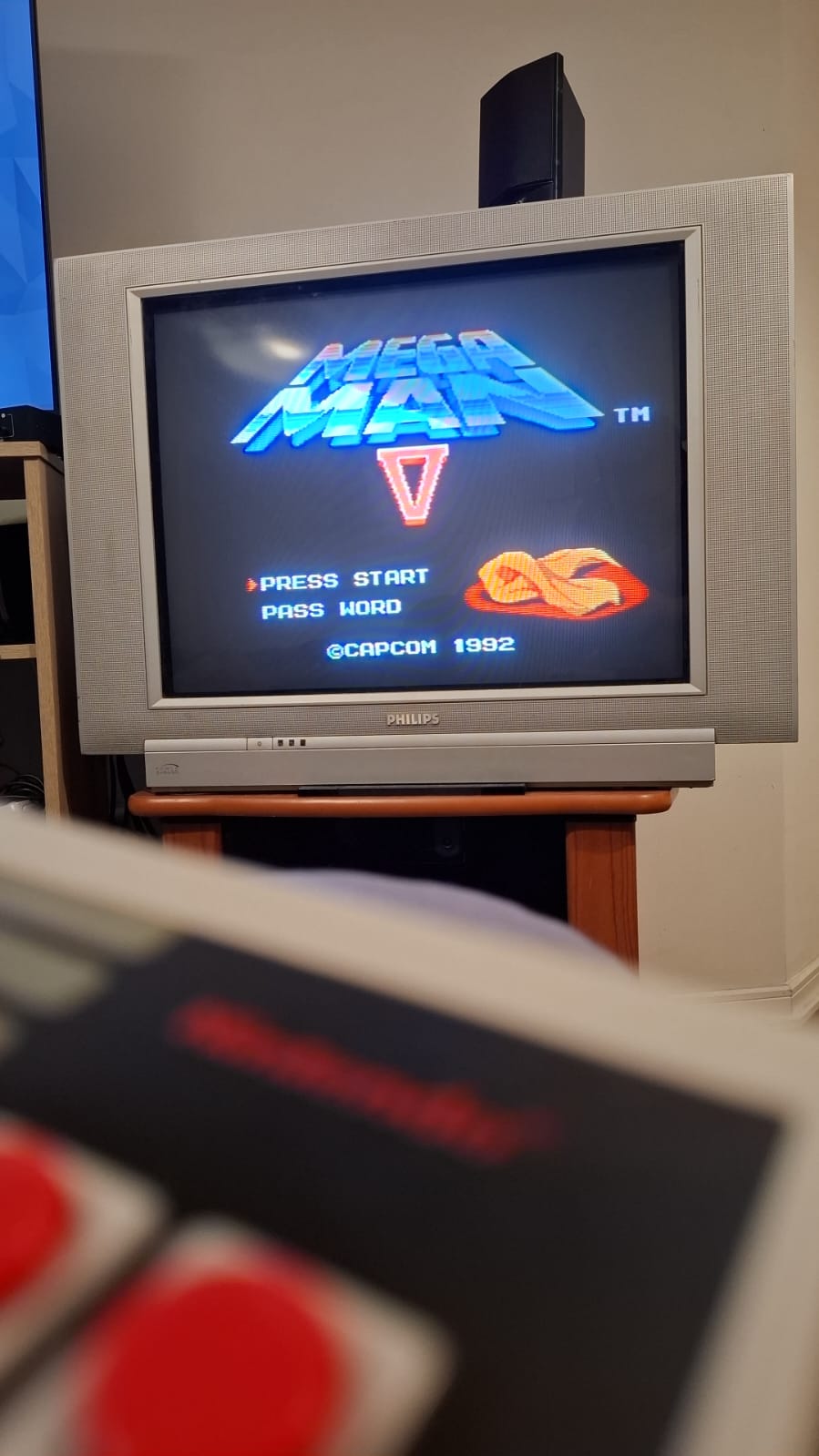
Artists in the eighties drew with a tube TV in mind. On a CRT, pixels are not sharp squares: phosphor glow softens them slightly, scanlines leave a visible gap and the dot patterns used to fake extra colors blend together. On an LCD those same patterns show up as a grid, and the picture goes through a scaler that adds lag.
That lag, even a few milliseconds of it, is noticeable in reflex games like Mega Man 5 or Castlevania. With the Zapper it is decisive: the gun only works with a tube's scan.
Testing a tube
When checking a CRT, leave a still image on screen, such as a game's title, and look for a crooked picture, a dark or discolored corner, or any shaking. The tube shifts a little as it warms up, so check again after half an hour. Some cropping at the edges is normal: games were designed with that in mind.
Many sets from the seventies and eighties have knobs for color, tint and brightness, which later moved into menus. With Mega Man 5 on screen, calibrating is easy: the hero's blue should not drift toward green and the red should not bleed past the outline. Sony's Trinitrons, like the ones pictured, use an aperture grille instead of the usual shadow mask, which gave them a brighter picture.
Cables
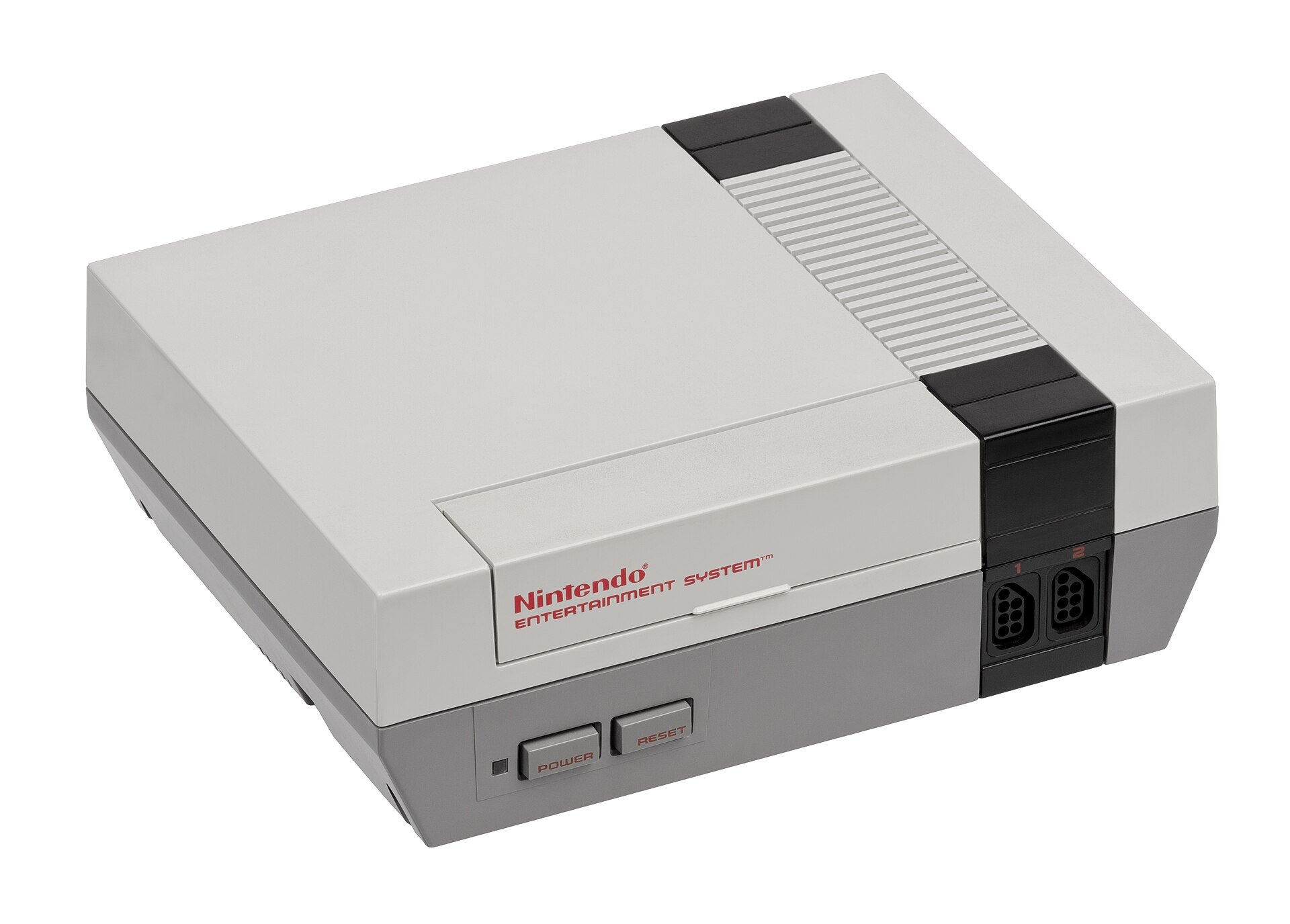
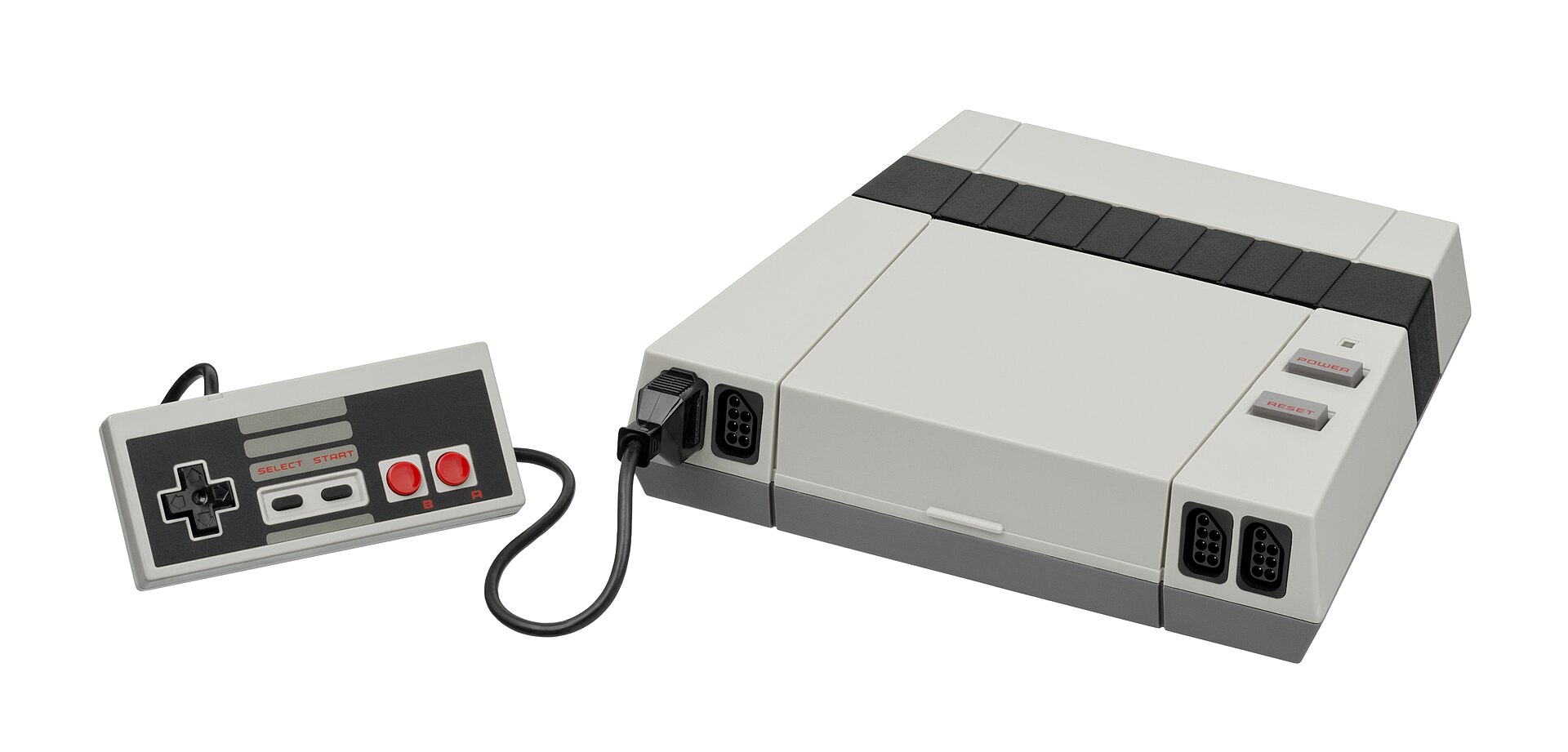
The NES outputs two signals: RF, through the antenna output, and composite video, through the RCA video and audio jacks. If the TV has a composite input, use it: the picture is cleaner and free of RF interference. If the image jumps when you move the cable, the problem is the plug, not the TV.
Buying a CRT today
Tube TVs turn up at flea markets, house moves and estate clear-outs, and are often given away because nobody wants to carry them. Ask how long it sat unused and ask to see it running for at least ten minutes: a burning smell or a shrinking picture are warning signs. For reference, in April 1999 Entertainment Weekly listed prices of about $1,800 for a 32-inch Sony FD Trinitron WEGA and about $2,400 for the 36-inch model.
Chile's mains are 220 volts. A North American NES needs a 220-to-110 transformer; TVs bought locally already run on local power. Check the transformer first, because a faulty one can damage the console's power supply.
Maintenance
The cleaning you can do at home is external: dust off the case and vents with a dry brush and wipe the screen with a barely damp cloth, always with the set unplugged. Do not open the back cover. The tube holds a high-voltage charge long after it is switched off, and any internal repair is a job for a technician.
A tube also changes how a group plays. The screen is smaller and the sound comes from a single speaker, so everyone sits closer, around the same set.
 Evan-Amos · Public domain
 Evan-Amos · Public domain
 Evan-Amos · Public domain