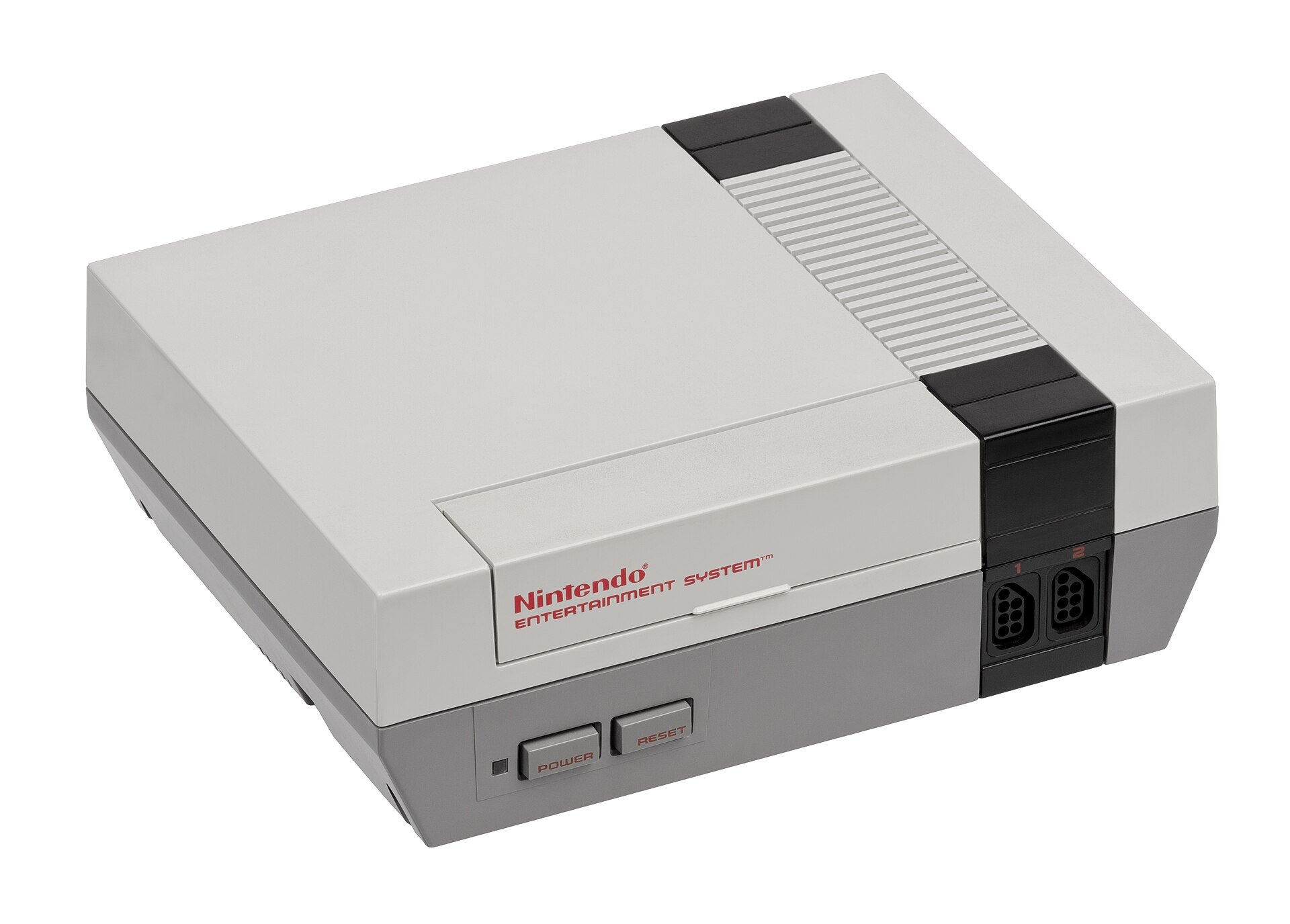
The Family Computer launched in Japan on July 15, 1983, red and white, with hardwired controllers and a microphone in the second one. For the United States, Nintendo redesigned it completely: the NES was test-marketed in New York from October 1985 and went nationwide in 1986, gray, with detachable controllers and a VCR-style front tray. Inside they share the processor and video chip, but the cartridges are not compatible: 60 pins versus 72.
Sharp's Twin
In 1986 Sharp built the Twin Famicom under license: Famicom and Disk System in one unit, red with black trim or black with red trim. In Chile the norm was the NES or a clone; the Famicom came back with travelers or turned up at markets, and on an NES it needs a 60-to-72-pin adapter.
The 1993 redesigns
In 1993, with the Super Nintendo already in shops, Nintendo relaunched both consoles as cheaper, simpler models. In North America the NES-101 came out on October 15 at $49.99: the cartridge goes in from the top, like on the Famicom, which ended the 72-pin connector trouble. It has no lockout chip and no RCA outputs, only RF, and came with a new round-edged controller nicknamed the "dogbone".
In Japan the AV Famicom (HVC-101) arrived on December 1, gray and with the same design. It swapped the RF output for the Super Famicom's multi-AV connector and came with two detachable dogbone controllers, without a microphone. Its flat top still lets the Disk System be used. Today it is one of the most convenient ways to play Famicom cartridges on a TV with a video input.
| Famicom | NES | Twin Famicom | NES-101 | AV Famicom | |
|---|---|---|---|---|---|
| Year | 1983 | 1985–86 | 1986 | 1993 | 1993 |
| Cartridge | 60 pins, top | 72 pins, front tray | 60 pins and disks | 72 pins, top | 60 pins, top |
| Controllers | Hardwired; II has a mic | Detachable | Hardwired | Detachable, dogbone | Detachable, dogbone |
| Video | RF | RF and RCA | RF | RF | Multi-AV |
| Disk | Disk System add-on | No | Built in | No | Disk System add-on |
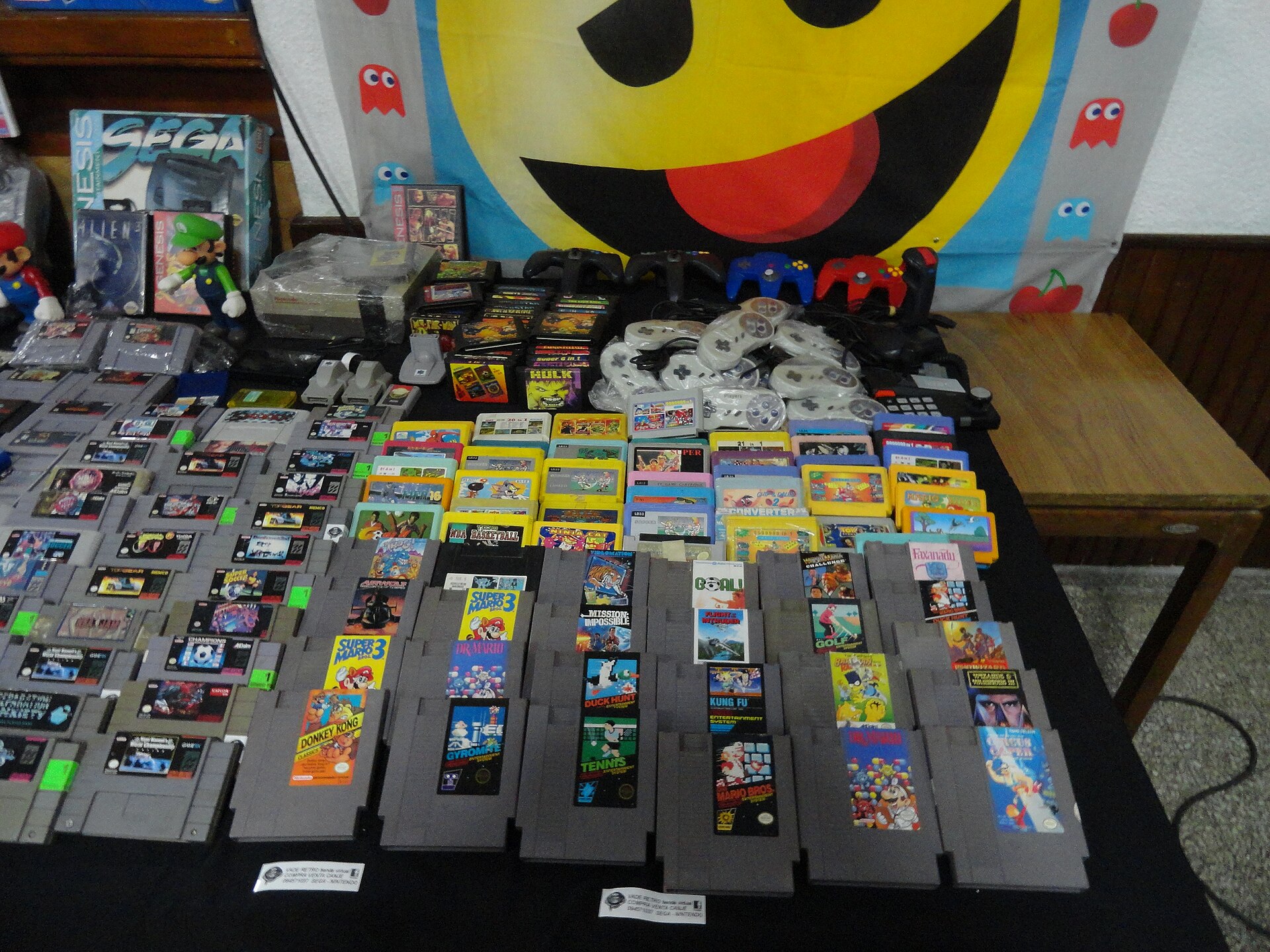 NaBUru38 · CC BY-SA 4.0
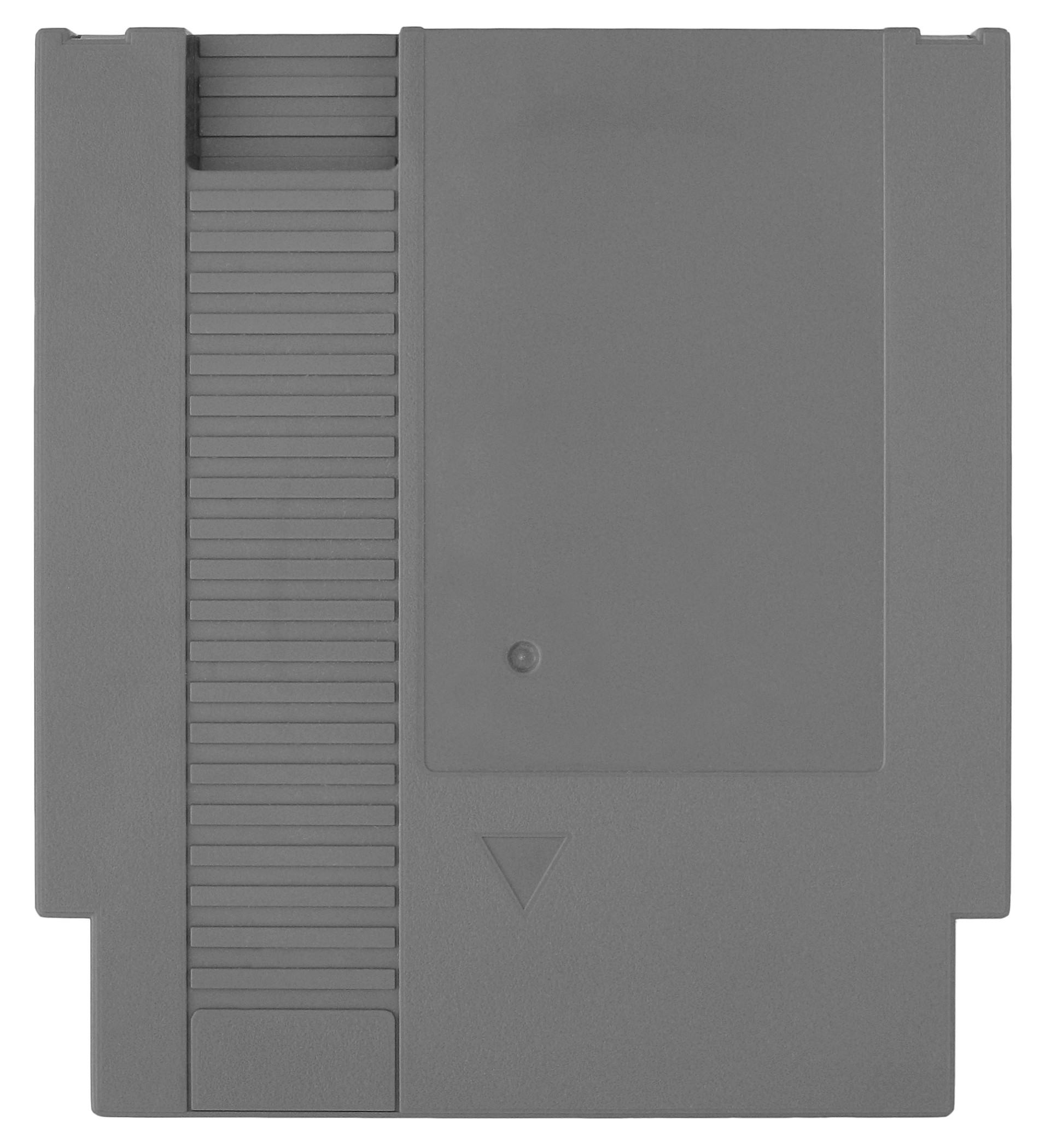 Evan-Amos · Public domain
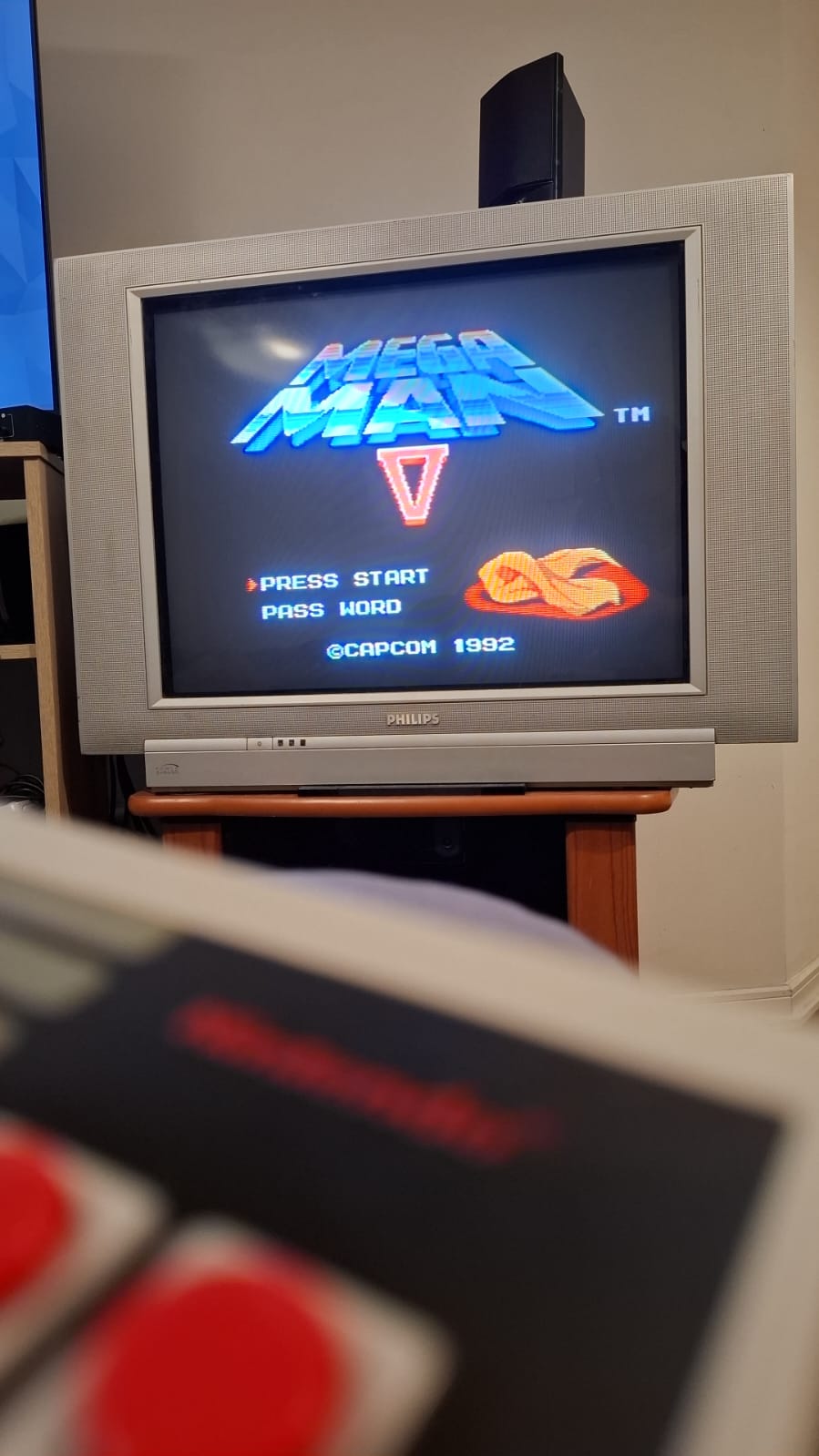 Equipo Wisegrow · Foto propia