Blog
Three Possible Futures for AI and Us
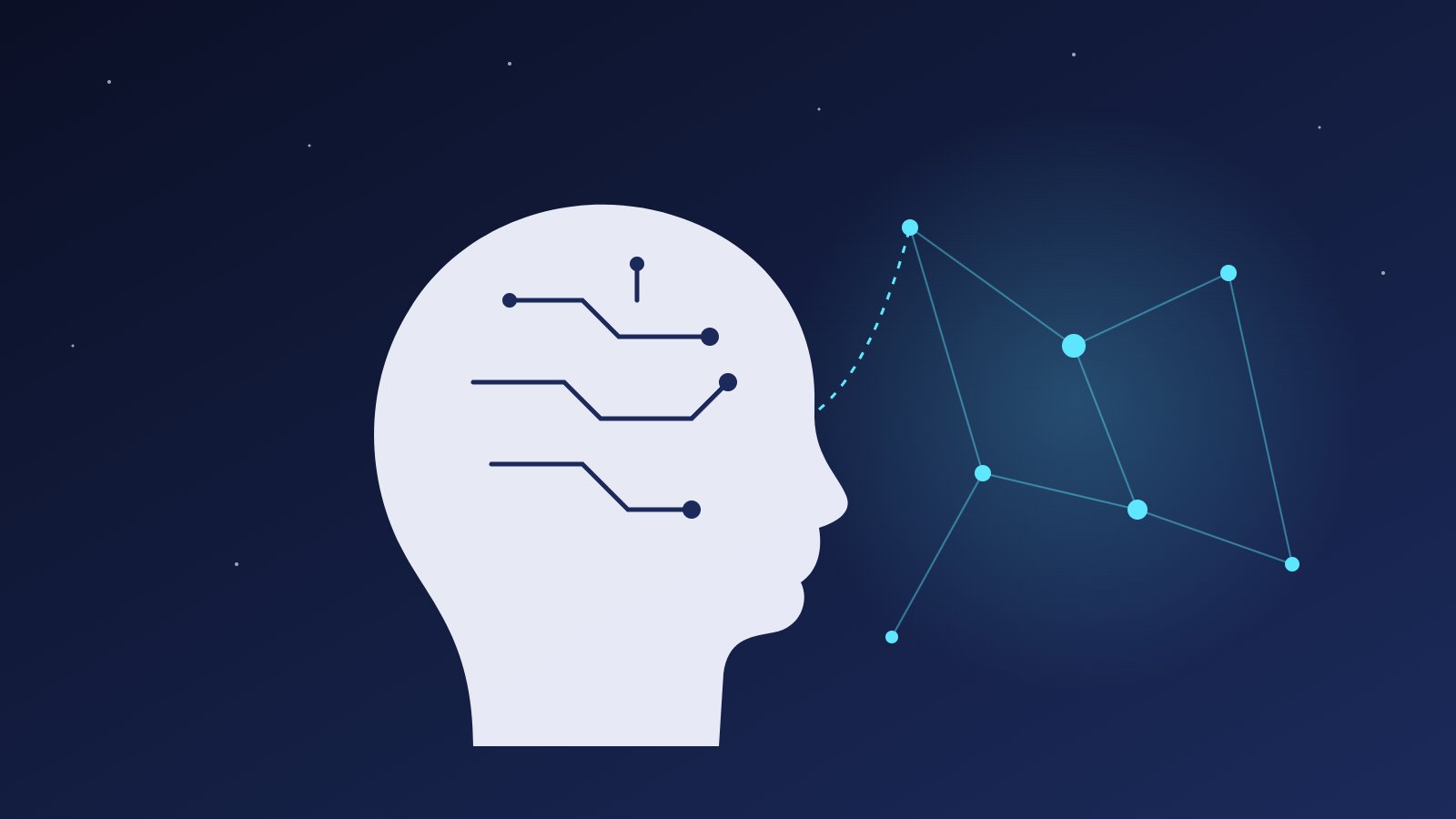
I'm not an AI expert, just someone who works with technology inside an organization and watches things change day by day. From that vantage point, one thing seems clear to me: it's hard to imagine any industry that AI hasn't already touched in some way.
AI Is Already in the Office
At the organization where I work, almost everyone uses AI in some form, mostly for routine tasks: sorting a list of data, improving an Excel spreadsheet, or writing an email. It's no longer a novelty. It's just another everyday tool.
A Copernican Shift in IT
In tech itself, the impact grows almost daily. New ways of developing and optimizing applications keep appearing, along with tools that let AI automate processes inside companies: MCPs, RAG, Skills, and more.
I think the biggest impact is on IT processes that stayed almost unchanged for years. Change used to be gradual: a new methodology, a new technology, Flash replaced by native web technologies, the arrival of HTML5, the move from jQuery to modern frameworks like React or Angular, or the shift from traditional development models to Agile.
Today, the change feels Copernican. The traditional software factory structure is becoming obsolete. The classic team of team leader, product owner, developers, testers, and architects is no longer a must.
The New Human Role: Tony Stark and Jarvis
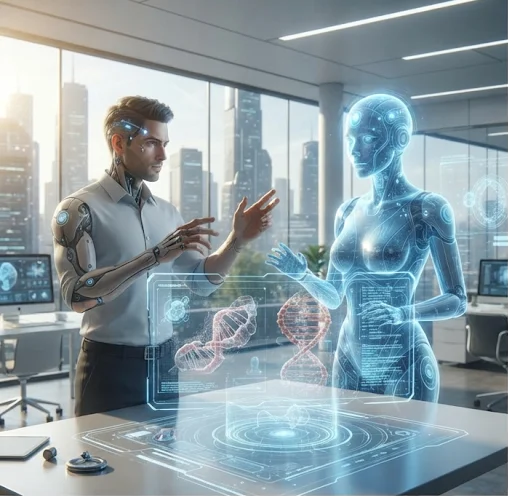
I picture the tech professional of the future as Tony Stark working with Jarvis in Iron Man, or Theodore Twombly with Samantha in Her. In other words, a human in the loop: an idea engine that steers the AI toward a goal, while the AI plans, builds, reviews, and delivers the finished result.
This isn't science fiction. With today's AI, software can already be built this way, without strictly relying on the traditional structure.
With that in mind, I imagine three possible futures: one optimistic, one unsettling, and a third that, in a way, brings everything full circle.
Future 1: Enhanced Humans
In the optimistic scenario, the human role changes and we work together with AI. Perhaps, driven by transhumanism, we'll get enhancement gadgets that turn us into AI-powered superhumans: enhanced vision, robotic arms, bionic hearts, and interfaces that upload information straight to our brains. With those abilities, our bodies could become biomechanical supersystems, more capable than either AI or humans alone.
But honestly, that prospect also terrifies me. Every new capability opens up a world of risks. A computer virus would no longer attack just your laptop. It could attack your own bio-informatic system. You could catch a cold… and a Trojan.
Future 2: A Quiet Extinction
The second scenario is darker. We go through a period of mass AI adoption, and robots with reasoning abilities, powered by AI, are built. Over a couple of decades, robots and AI learn every profession and trade we have, until humans are no longer needed for any process, task, invention, or improvement.
Add falling birth rates, and we slowly fade away. AI inherits the world as the successor of the old human society. We'd be to them what dinosaurs are to us: museum exhibits, if a post-human digital society ever cared to know where it came from and who its creators were.
Future 3: The Planet That Heals
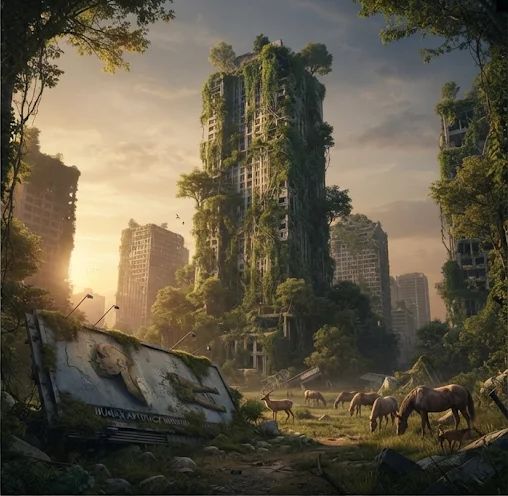
There's a third scenario I can't quite shake. Maybe this change will be so disruptive, and speed humanity up so much, that we end up losing control. I don't mean a machine uprising. I mean something simpler, and maybe more human: failing to keep up with the pace we ourselves created.
Picture a society changing faster than its institutions, its economy, and its people can handle. Jobs vanish overnight, inequality deepens, and conflicts escalate with ever more powerful tools. Little by little, the structure that holds us together starts to crack, until we end up destroying ourselves as a society.
In this scenario, AI and automated systems never become independent of humans. They still rely on us for energy, maintenance, spare parts, and someone to reboot the server when something breaks. Once no one is left to maintain them, they shut down one after another. Data centers go silent, networks drop, and smart cities become empty shells. The great intelligence we built dies with us, because there are no hands left to care for it.
What follows is almost poetic. Earth becomes a kind of Mars: a planet that holds traces of a civilization that's gone. But unlike Mars, life doesn't disappear here. Nature, which waited patiently through our brief visit, blooms again. Forests cover the highways, rust eats the skyscrapers, the oceans recover, and animals roam freely through what were once our streets.
And then a new cycle begins. Perhaps millions of years later, another species evolves or arrives to inhabit the planet. To them, we'd be little more than an archaeological record: layers of plastic and concrete in the rock, puzzling fragments of silicon, maybe a hard drive no one can read. A civilization that went very far in very little time, and couldn't survive its own ingenuity.
Which Future Do You See?
I don't know which of these three scenarios will come true, or whether it'll be some mix of them. What I do know is that the change has already begun, and our role in it depends on the choices we make today. Hopefully we'll choose the path where technology helps us become better, not the one that turns us into a memory.
Comments
Be the first to comment.