Blog
Sweet Home and the games that never crossed the Pacific
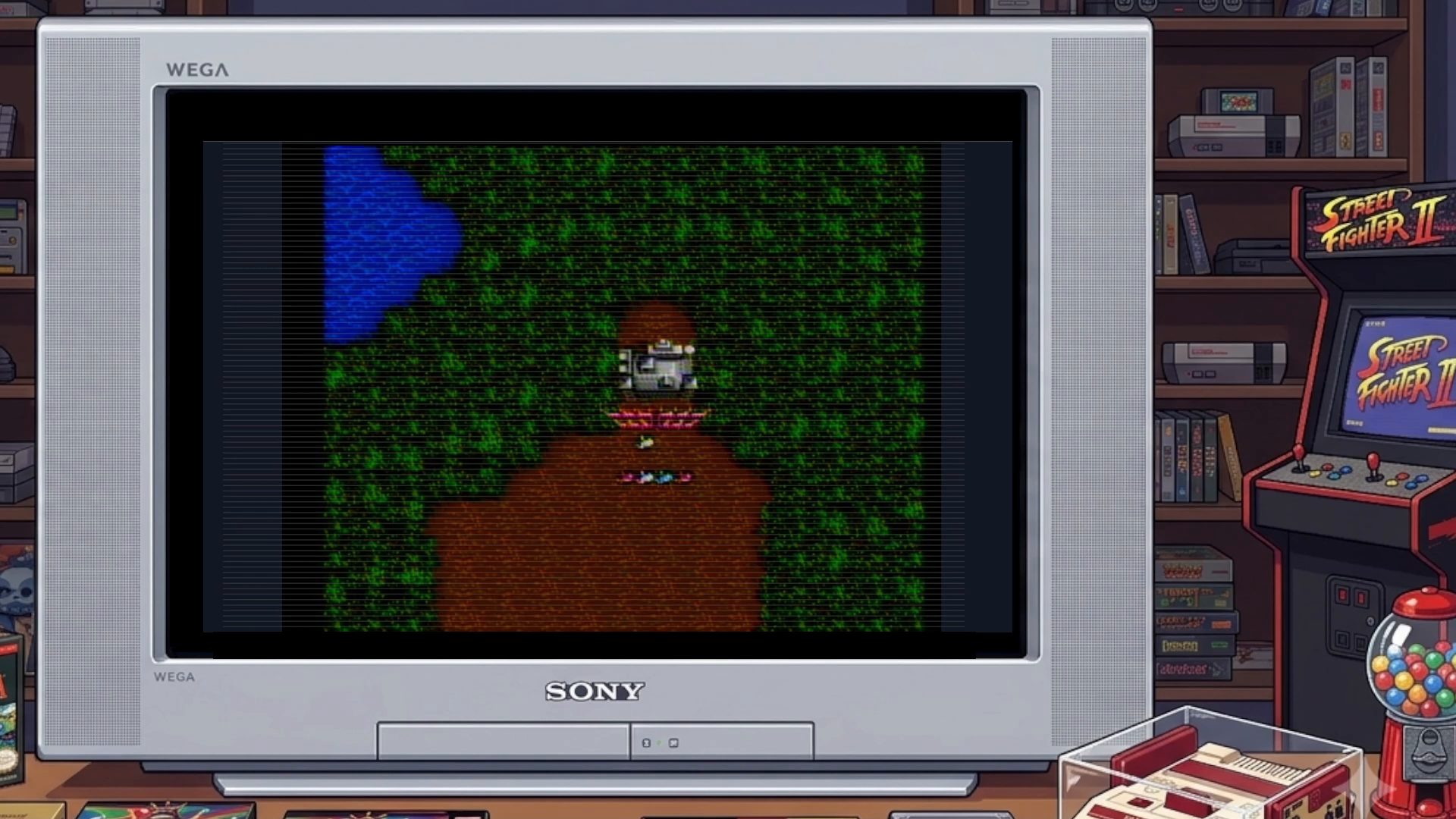
Why are there excellent Japanese games that never reached America, or the rest of the world?
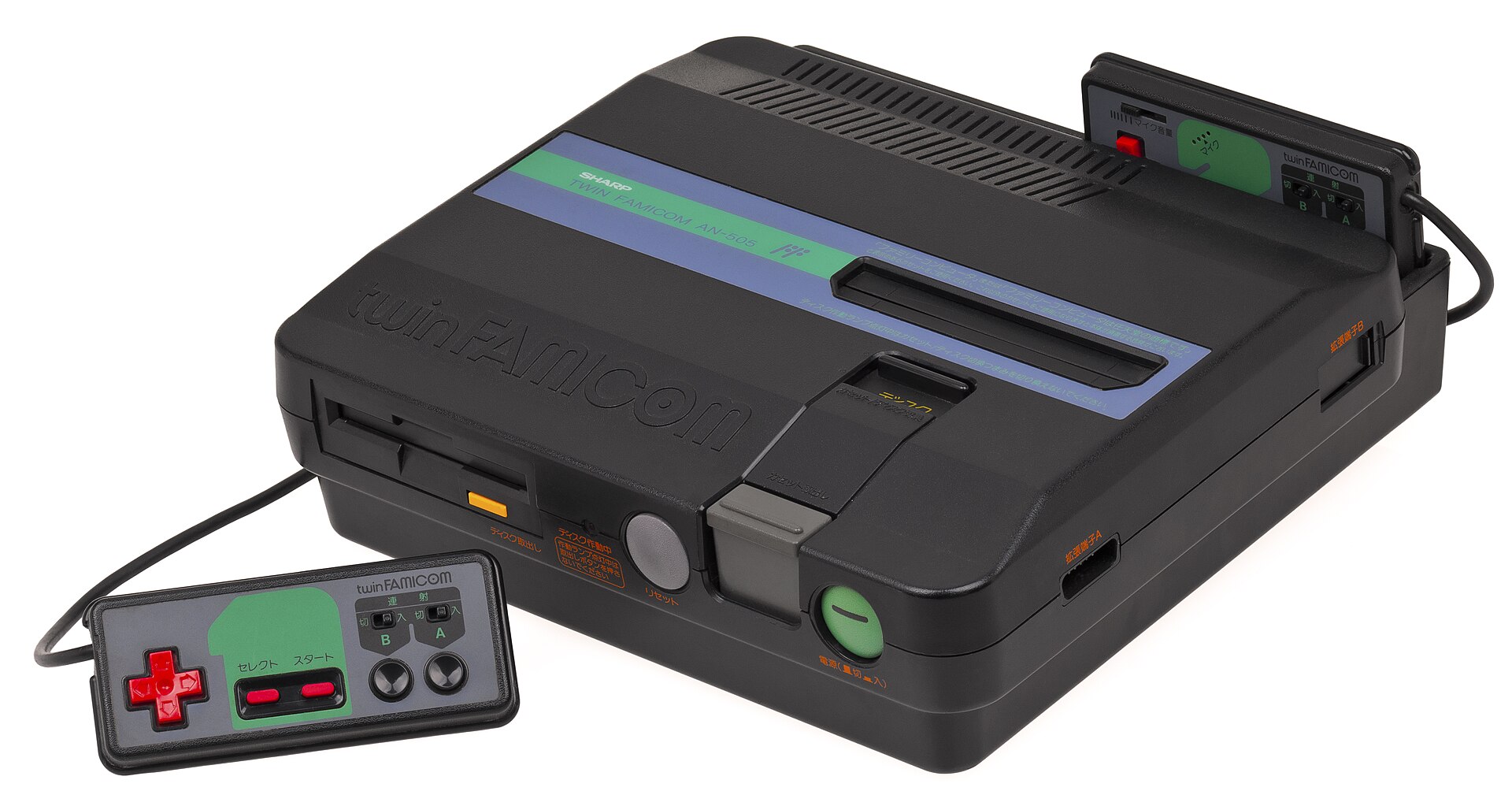
I asked myself again the day I bought a Twin Famicom. Sharp built it, under license from Nintendo, and it came out in Japan in 1986. To me the design is much more modern than the red-and-white Famicom, and also than the NES of that era: a black and red box, with the controllers stored in the body, and video output that Nintendo took years to put on its own console. Inside are the two things that in Japan came separate: the console and the Famicom Disk System drive.
That drive matters. There are games that only existed on disk, in Japan, and that an NES cartridge cannot read. The Twin opens them. Even so, the question got bigger than the console.
Ordinary people, with ordinary tools

I have been wondering for a while why a good game stays in one country. Did they see us as less able to enjoy it? Was it money, time, risk? Or did they really believe that on the other side of the ocean we would not understand a story stranger than the hero of the week?
It happened to me with Sweet Home.
On the NES I got used to epic characters. Zelda. Mega Man. People with an ability out of the ordinary, chosen to save a kingdom. I almost never saw, on that console, the other story: ordinary people to whom something that is not ordinary happens.
The first time someone pointed at that gap was a friend. "You should try Mother," he said. "EarthBound. It's good." And that was exactly it. A kid, his house, his neighborhood, a bat, and an ending that does not look like a parade of power. After that I thought: it must be the only game in that family with that approach.
It was not.
Looking for games for the Twin I found Sweet Home, by Capcom, on Famicom, 1989. I looked it up. I said: wow. It is a television crew that enters the mansion of a dead painter, Ichiro Mamiya, to photograph the frescoes on the walls. A producer, a director, a cameraman, a reporter, and a student. Nobody has a magic sword. Each one carries a tool from their job, and without that tool the rest cannot move on.
Kazuo, the producer, has a lighter. It burns ropes, lights candles, and sometimes that also works in a fight. Akiko, the director, carries the first-aid kit. Taguchi, the cameraman, has the camera: it takes pictures of clues, and there are ghosts the light hurts. Emi, Kazuo's daughter, carries the keys. And Asuka, the reporter, carries a vacuum cleaner.
That vacuum is the one I liked most. It cleans dust off the frescoes and pulls broken glass off the floor. Without it, the first stretch of the mansion will not let you continue. A vacuum cleaner. In a horror game. In 1989.
The party can split. You go in alone, in pairs, or in threes, and you switch groups when you want. There is an inventory, the kind that hurts because not everything fits. There are puzzles that are not "push the block": they are about looking at what you have and asking what it is for in that room. There are different endings depending on who is still alive. It is a horror RPG set in a single house, and the house is better told than a lot of kingdoms.
What slows me down is the language. The original release is in Japanese. To really play it I have to use fan patches, in English or Spanish. I am glad they exist: without them the mansion would stay closed. Something is still lost in the transfer. The old English patch, the one from 2000, even changed the cameraman's name: Taguchi became Taro. A small letter like that already tells you that you are reading a version of the version.
The mansion Capcom could not repeat as it was
The other day I read about the early years of Shinji Mikami, director of the first Resident Evil. The story fits this console and this game.
Tokuro Fujiwara had directed Sweet Home. Years later, at Capcom, he proposed a horror game in a mansion to Mikami. At first the idea was to remake Sweet Home with the graphics the Famicom had not been able to give. Fujiwara put it this way: he wanted to include what had not fit in 1989, especially in the image. Mikami did not want the job. Being scared bothered him. He took it anyway.
Capcom no longer had the rights to the film the game is based on, so they could not call the new thing Sweet Home. They invented another universe. The ghosts became zombies. The television crew became a police team. The mansion stayed. So did the miserable inventory, the notes left in the rooms, the group that splits up, the key, the lighter, and even the door that opens by itself while the next room loads. That door, the one from Resident Evil, comes from a Famicom game.
So: the game America did not receive is the grandfather of the horror America did buy in bulk, six years later, once it no longer had to pass through Nintendo's seal.
They were not looking at us as another species
The short answer, the one that works for me, is not that they saw us as less able.
It is drier. Localizing a game with a lot of story cost money: translating, printing the manual, making the box, betting that it would sell. On a cartridge, English text takes more memory than Japanese, and memory was expensive. If the numbers did not close, the game stayed in Japan. On top of that is the filter at Nintendo of America in the NES years. Blood, horror, religion, anything that stepped outside "fine for the family" was cut, or never even submitted. Sweet Home is a mansion with corpses, frescoes, and an ending that depends on who dies. A faithful version, on the Western NES, was very hard to picture. Not because a kid in Chile could not understand a vacuum cleaner. Because the business and the censorship of that office were not built to let it through.
The Twin's disk drive tells another part of the same story. The Famicom Disk System never left Japan. Whole games lived only on that disk. Famicom Detective Club, Nintendo's mystery novels, waited until 2021 for an official translation. Decades in which a Japanese detective case was, for us, a rumor.
And sometimes the bet proved wrong, over the years:
- Mother (1989) stayed in Japan. The English translation, Earth Bound, was finished and cancelled. The one that did cross was the sequel, EarthBound, on Super Nintendo. The first one arrived officially much later, as EarthBound Beginnings. My friend was right before the market was.
- Fire Emblem waited until 2003 to come out in the West, on Game Boy Advance. Nintendo believed for years that a strategy game, with permadeath and that much text, would not find an audience here. Marth was already in Super Smash Bros. Melee and a lot of people still could not play his game.
- Final Fantasy II and III on Famicom did not come out in America at the time. Here we got the first one, and then we jumped to the ones renumbered as II and III. The ones in the middle arrived decades late, in remakes.
- Clock Tower, on Super Famicom (1995), also stayed in Japan. The horror of a girl with no weapons, chased by a man with scissors. The PlayStation sequel did travel. The original did not.
It is not a list of pity. It is the pattern. A long story, a strange tone, or hardware that did not exist outside. And later, when they finally come out, it turns out there were people waiting for them.
Mizzurna Falls, the American town America did not play
There is another one that stays with me, and this one is not Famicom. It is called Mizzurna Falls. Human Entertainment, the house of Clock Tower, made it for PlayStation. It came out in Japan on December 23, 1998. It never had an official release outside. In 2021 two fan translations into English appeared. That is as far as the legal path of the language goes.
The premise is the same obsession as Sweet Home and Mother, moved to a different house. There is no chosen one. There is a small town, under two thousand people, invented in Colorado, at the foot of the Rockies. It is called Mizzurna Falls and the game says it with a straight face: it once came in third in a contest of "peaceful towns of America." On Christmas morning 1998 they find Kathy Flannery in the woods, covered in blood, with wounds that look like a bear's. Almost immediately Emma Rowland, a classmate, disappears. You are Matthew Williams, another classmate. You were among the last to see her. You have a week, a beetle that looks like a Volkswagen, and the job of remembering to put gas in it.
The whole town runs on a schedule. People go to work, to the diner, home, to the hospital, and if you are not there when the scene happens, the scene happens anyway. There is no second chance. The map is a single one: you can follow a character down the street. Eat if you want. Sleep if you want the clock to move. On December 31 the time runs out. If you asked the right questions, Emma can still be alive. If not, the town hands you the case already closed.
It is ambitious to the point of tripping. The PlayStation chokes on that map, the camera does not help, and missing one conversation can leave the file useless. Human Entertainment barely had a second life after this game: it was one of the last the studio published. Even so, the idea belongs to a later generation. An open town, with people who exist when you are not looking at them, in 1998, on a console of loading screens. And it is told as if it were the United States.
That is the part I have the hardest time with. Mizzurna Falls takes place in America, with an American teenager, at Christmas, and America did not receive it. Not because the subject was far away. Because nobody paid for the translation in time.
The question, again
It still turns over in my head. Would Sweet Home, the first Mother, Mizzurna Falls have been hits? I do not know. A hit is a cash register, and we do not have that register. What I do believe is that the audience was not the problem. In that era we were already playing strange, long, sad things. What was not ready was the channel: the license, the cartridge, the family seal, and the office that had to bet on that game outside Japan.
Playing them now, in Japanese or in a fan patch, is arriving late and through the service door. You feel it. You also feel that it was worth opening.
Does that split seem fair to you, the one that says "this leaves the country and this stays"? Is there a game you met years later and thought had been kept from you without anyone meaning to? Tell it. For now, a vacuum cleaner in a mansion is enough for me, and a Twin that can finally read the disks they never sent us.
Sharp's Twin Famicom, and Famicom and PlayStation games that stayed in Japan. A personal take.
Comments
Be the first to comment.