Blog
Snake's Revenge: the game I hated as a kid and finally understood years later
There are games you remember because they were great.
Others, because they were bad.
And some you remember simply because they belong to a season of your life.
For me, Snake's Revenge sits in an even stranger category: a game I hated the first time I played it, forgot for years, and ended up rediscovering thanks to another game.
And that other game was Metal Gear Solid.

My first NES
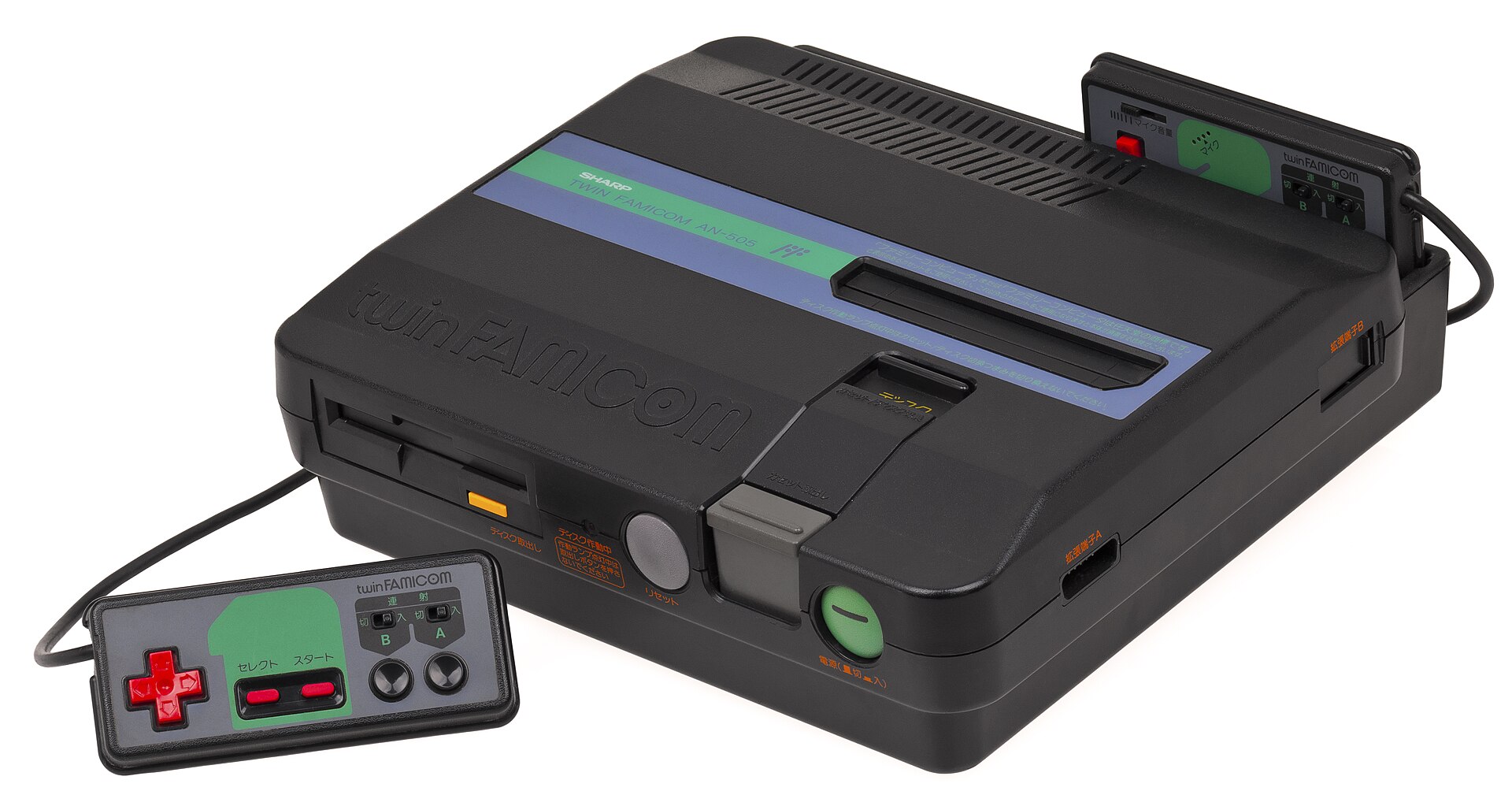
My first console was a Nintendo Entertainment System — the famous NES.
I got it around 1993, when the console had already been on the market for a few years and the Super Nintendo was already a reality. To me, of course, that barely mattered. It was simply my first console, and receiving it felt incredible.
A tremendous gift from Viejo Pascuero — or Santa Claus, depending on where you are reading this from.
Although that Christmas deserves a full story we might leave for another article. Haha.
In the early years I played a lot of Super Mario Bros. and Duck Hunt. At some point I got Micro Machines, and when I was about eight, two games arrived that would become pretty important in my childhood: Shatterhand and Snake's Revenge.
The first was love at first sight.
Shatterhand felt incredible. Easy to understand, fast, addictive, with a mechanic I still remember perfectly: you could combine certain item sequences to turn into a kind of robot and unlock different abilities.
It was the kind of game a kid could put in the console and understand almost immediately.
Then came Snake's Revenge.
And that is where the trouble began.
The box art promised too much
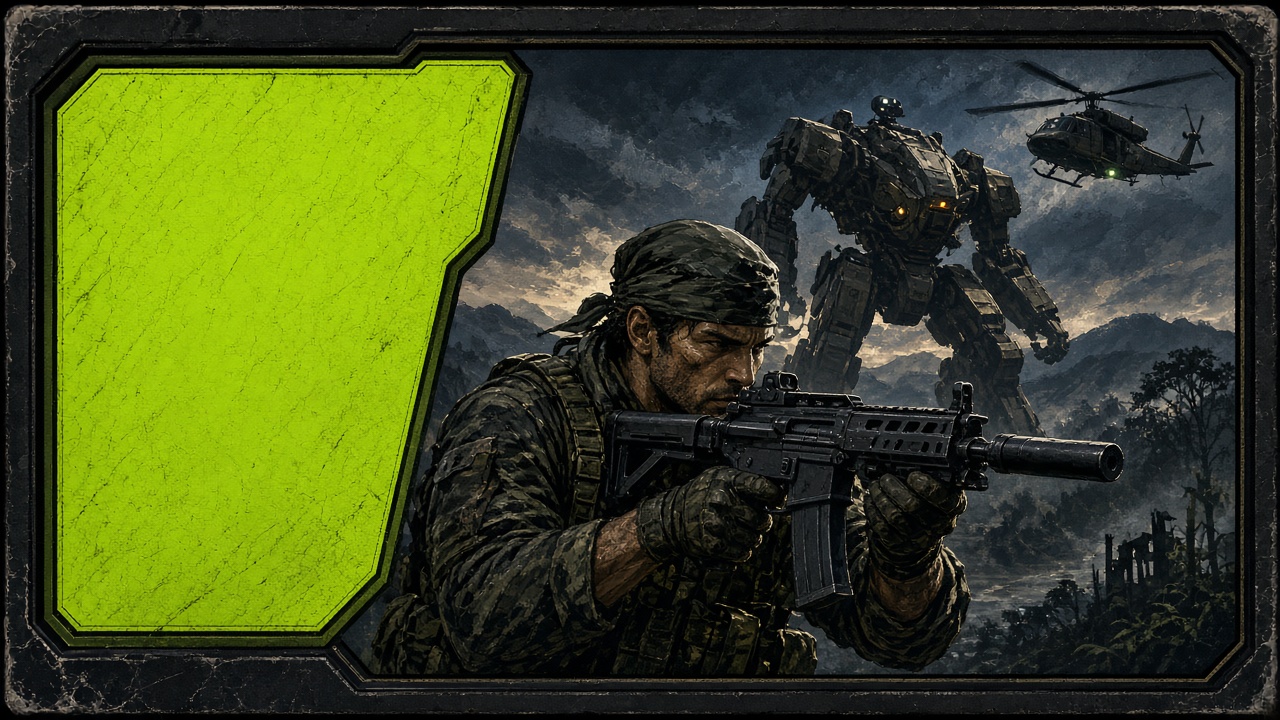
I remember the cover perfectly.
Snake with weapons, a robot in the background, green lettering, a helicopter. For an eight-year-old who had absolutely no idea what Metal Gear was, that image could mean anything.
And my imagination did the rest.
I thought I would get to fly helicopters. That I would have different weapons. That there would probably be explosions everywhere. Maybe it would be something like Operation Wolf, but with a soldier moving through an enemy base.
In short, my head had already invented its own game before I even inserted the cartridge.
And that is something video game covers of that era did particularly well: they sold a fantasy.
You did not need YouTube trailers, social-media screenshots, or influencers showing the first minutes. You had a box, a spectacular illustration, and your imagination did the rest.
My first contact with Snake
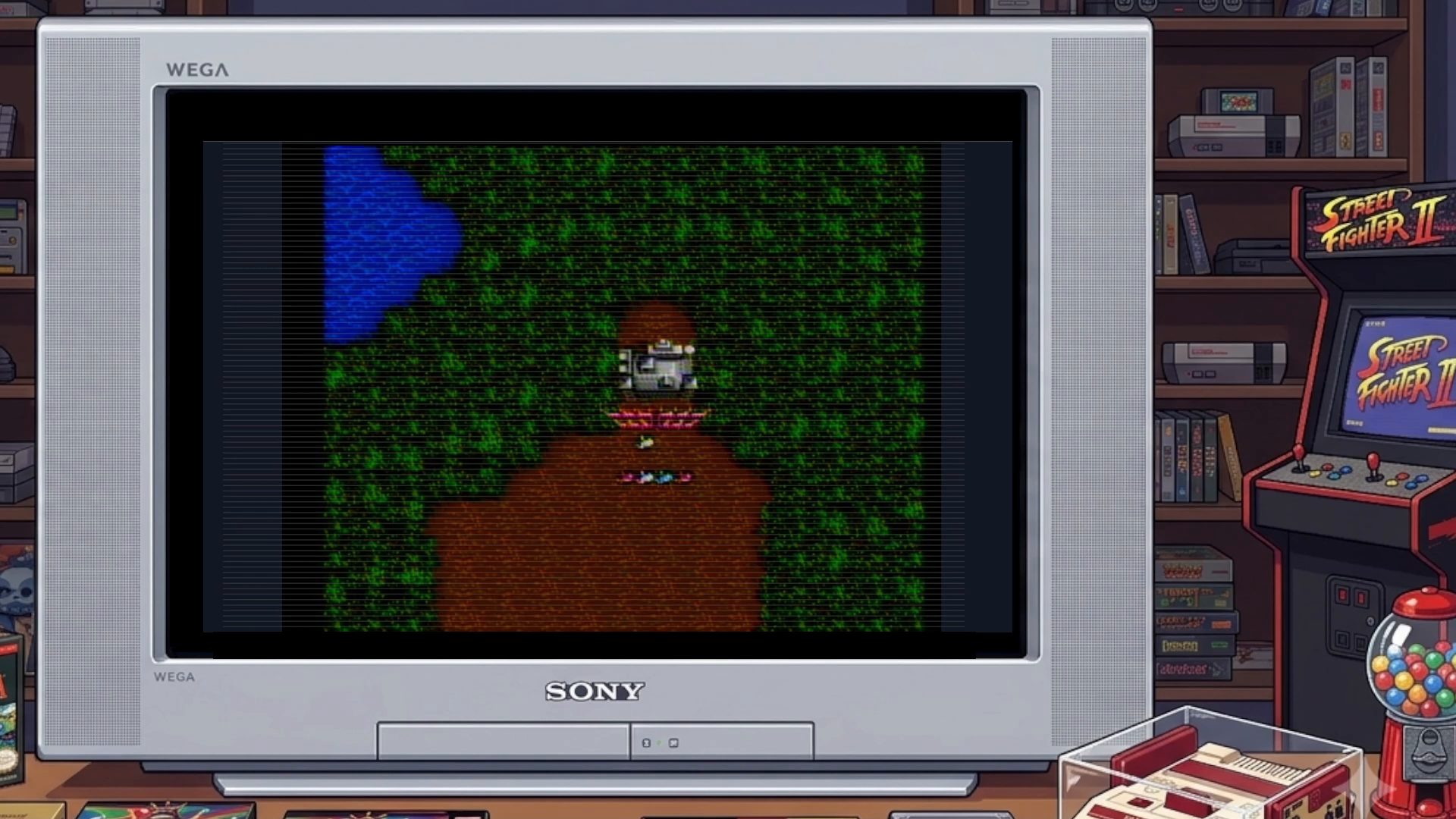
I inserted the cartridge. The intro letters appeared. Then the opening sequence began.
I did not know English. So naturally all that on-screen text did not help me at all. It mostly annoyed me. I wanted to play.
I remember alarms sounding and not understanding what was happening. Then a dark screen that suddenly lit up. Later another alarm.
Today I know those communications and alarms were part of the game's alert system. At the time, for me, inexplicable things were simply happening.
I reached a certain area. Enemies spotted me. They shot me. I died.
And after a few minutes, my conclusion was pretty blunt:
“What a bad game.”
I pulled the cartridge and went back to Shatterhand. And that ended my relationship with Snake's Revenge. At least for several years.
Meeting Snake… again
Time passed. I never went back to Snake's Revenge.
Until one day, when I was about 12, a friend said something that in that era was basically an invitation to paradise:
“Let's go to this video game shop. They rent a PlayStation for 500 pesos every 15 minutes.”
It was a time when owning a PlayStation was not within everyone's reach. For us, those 15 minutes were a chance to try games we simply did not have at home.
And that day my friend showed me Metal Gear Solid.
What I saw left me completely impressed: the intro, the graphics, the cameras, the music, the atmosphere, the ability to hide, avoid enemies, and move through a military facility undetected.
For someone coming mainly from the NES, it looked like technology from another planet.
But one thing caught my attention especially.
The protagonist was named Snake.
That name felt familiar. Suddenly I remembered the cartridge that had been sitting for years: Snake's Revenge.
I asked my friend and he explained that Snake was the Metal Gear protagonist, and that the idea was, among other things, infiltrating enemy facilities without being detected.
And something strange happened. My brain connected two games I had considered completely different for years.
I went looking for my NES again

When I got home I went straight for my NES. It was stored in a trunk. I took it out. Connected it to the TV. Found the cartridge.
Snake's Revenge.
This time I had something I did not have as a child: an English dictionary.
And I decided to do something that today would probably seem absurd: translate practically everything. Word by word.
What used to be annoying messages started turning into instructions. Alarms that once made no sense started having context. A strange game started revealing its true nature.
It was not about running and shooting wildly. You had to infiltrate. Avoid enemies. Get items. Use weapons and gear at the right moments. There were communications. Objectives. And finally, Metal Gear.
Suddenly I understood something I could not grasp at eight:
the game I had called bad was simply a game I still did not know how to play.
And this time I finished it
In the weeks that followed I played a lot. I was no longer comparing it to Shatterhand. I was no longer expecting an Operation Wolf clone. Now I knew what I was doing.
And I finally managed to finish it. For me it was an incredible experience.
There was another important factor too. PlayStations were still expensive then, and I did not have permanent access to one. Metal Gear Solid was something I could only play once in a while.
But I had my NES. And I had Snake's Revenge. So in a way, that game ended up calming my need for a PlayStation with Metal Gear Solid.
It was not Metal Gear Solid. It was not even the same experience. But now I could understand the connection.
The curious place of Snake's Revenge in Metal Gear history
This is where the story gets even more interesting.
Today Snake's Revenge is mainly known for one reason: Hideo Kojima did not take part in its development.
The game was developed by a Konami team in Kobe and published in the West by Ultra Games. It originally released in 1990 for NES.
That matters because the story is often told as if Konami simply made a sequel behind Kojima's back and he hated it. Reality is more interesting.
Kojima was indeed not involved. Years later, though, he said one of the developers on the project told him they were making a Metal Gear sequel — but that he wanted Kojima to make a true continuation.
According to Kojima himself, that conversation is what pushed him to develop Metal Gear 2: Solid Snake for the MSX2.
And there is a detail I love. In a 1999 interview by Steven Kent, when asked what he thought of Snake's Revenge, Kojima said he considered the game faithful to the Metal Gear concept and that he had enjoyed it.
In other words, the “Kojima hated Snake's Revenge” story is, at minimum, an oversimplification.
It is true that in a 2009 GDC presentation he made a less kind joking reference — calling it a “somewhat bad” game — but his comments in other interviews were far more positive.
And that changes my perception of the game quite a bit.
A strange Metal Gear, but an interesting one
Snake's Revenge is not part of Metal Gear's main continuity. The true continuation of the original story ended up being Metal Gear 2: Solid Snake, developed by Kojima for MSX2 and released in Japan in 1990.
But that does not mean Snake's Revenge has no value. Looked at purely as an NES game, it has quite a few interesting things going for it.
Its structure mixes infiltration sections with action and, at certain points, even side-scrolling segments. You gather weapons and gear, rescue prisoners, progress with key cards, and try not to be spotted.
It also tries to expand considerably on what the original NES Metal Gear could do. And for an 8-bit console, some of its scenes and spaces feel fairly ambitious.
Is it perfect? No. It has debatable design choices, high difficulty, and side-scrolling segments that can get pretty frustrating. Even modern reviews are split.
But I think there is an important difference between saying “It is not a good Metal Gear” and saying “It is not a good game.” They do not necessarily mean the same thing.
Is it worth playing today?
If you approach Snake's Revenge expecting Metal Gear Solid's narrative depth, the experience will likely be quite different from what you hoped for.
But if we look at it as what it really is — an early-90s NES action/espionage game — I think it becomes much more interesting. Especially if you know the development story behind it.
Because this is a fairly strange case in video game history:
- A game made without its original creator.
- A game that never became canon.
- A game that, paradoxically, helped spark the creation of the true sequel.
- And, years later, a game that would become part of the path that led to Metal Gear Solid.
For me, though, Snake's Revenge means something much simpler.
It is the game I did not understand as a kid. The game I abandoned because I thought it was bad. The game I went looking for years later because I heard the name “Snake” on a PlayStation. And the game I could finally enjoy once I understood what it was actually trying to do.
Maybe that is why I have a soft spot for it. Not because it is the best Metal Gear. Not because it is the best NES game. But because it reminds me of a time when a video game could hide a story from you for years — simply because you still did not know how to read it.
And maybe that is one of the most beautiful things about playing video games as a child.
First you play.
Then you understand.
And many years later, when you put the same cartridge back in, you discover the game had never changed. You had.
Personal opinion. Written for Wisegrow Games, September 2026.
Comments
Be the first to comment.