Blog
SEGA: the console that only existed on TV (and still left its mark on me)
There are brands you know because you had them at home.
And there are others you know because you never had them, and that is exactly why they stuck with you.
For me, SEGA belongs to that second group. A console that for years only existed on TV, in the odd magazine, and in conversations with friends. And still, or maybe because of that, it became one of the brands that marked me the most.

A NES kid
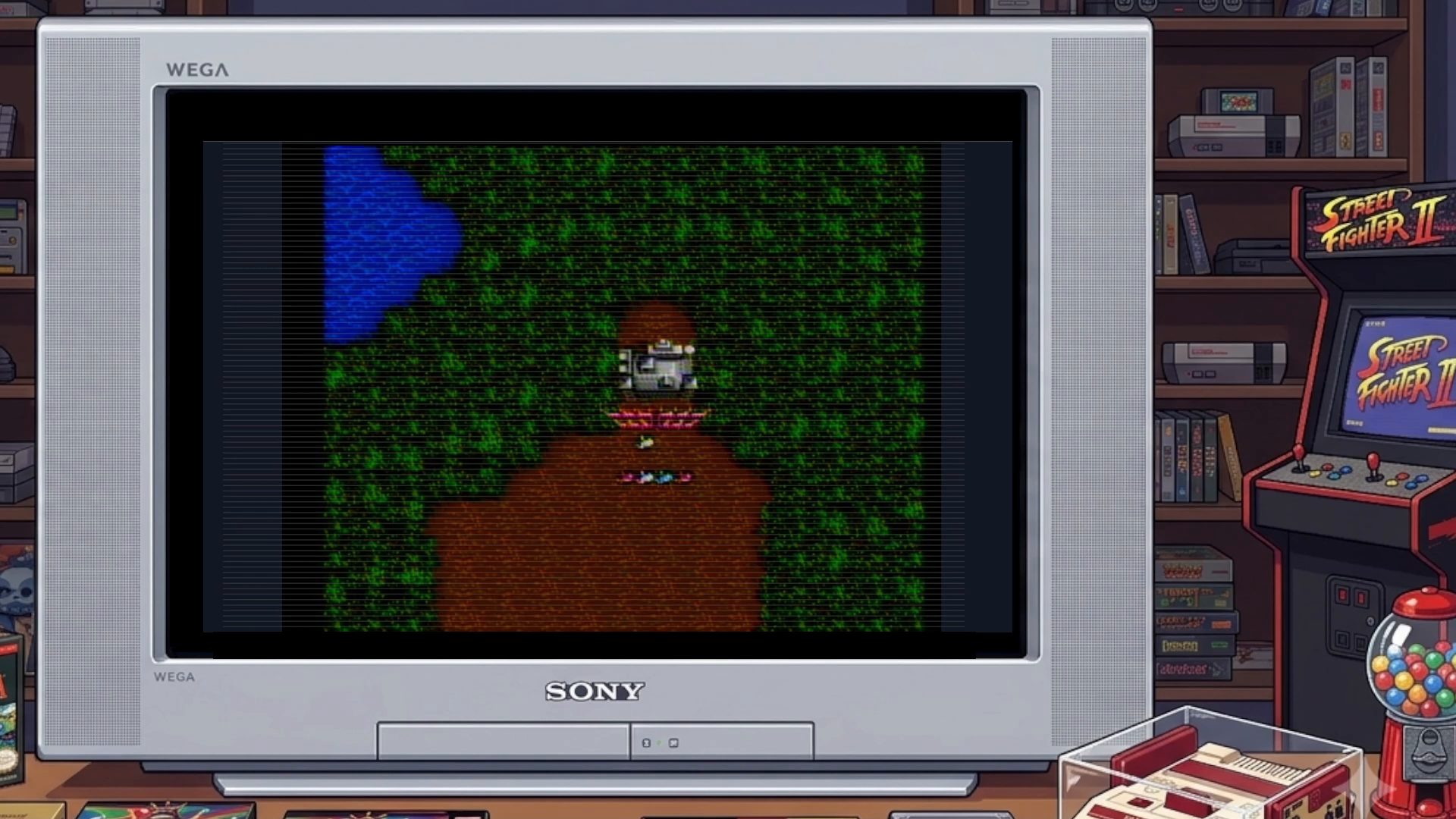
As a kid, the only console I had was a NES. At least until my teenage years. My whole video game experience revolved around that console and around Nintendo in general.

Then I got to know the Super Nintendo, because it started showing up on TV shows and in promotions. I remember one from a yogurt brand: if you collected certain lids and mailed them to a P.O. box in Santiago, you could enter a contest to win a Super Nintendo.

The other place I saw consoles was the supermarket. Back then there were magazine racks next to the checkout, and Club Nintendo magazine was always there. It had been sold in Chile since September 1992. Sometimes I would flip through it while our groceries for the month were being rung up.

All of this is to say something simple: until I was 8 or 9, I had no idea other consoles besides Nintendo existed.
Hugo and the phone call that changed everything
Once, talking with a cousin about games and consoles, we were discussing Hugo.
For those who did not live through it: Hugo was a show on TVN, Chile's state channel, where kids played a video game over the phone. You called in, and your phone keypad became the controller. Hugo was a troll who had to rescue his family from the witch Scylla, and you guided him from home, delay included. It aired from June 12, 1995 until the end of 1997, hosted by Ivette Vergara, and pulled 20 to 25 rating points at five in the afternoon.

For years I thought Hugo had been developed by Norwegians or Finns. I looked it up for this article and I was close, but no: Hugo was Danish. It was created in 1990 by Silverrock Production, later renamed ITE (International Television Entertainment), for the Danish show Skærmtrolden Hugo.
And the technical side was as impressive as I remembered. The system ran on two Commodore Amiga 3000 computers and a phone-tone (DTMF) decoder that turned each key press into an in-game action. Before playing you had to press 5 so the system could measure the call's delay. Ivette Vergara later described it as “a giant computer, a kind of refrigerator,” and the Chilean technicians who ran it had to travel to Denmark for training. Chile was also the first country in South America to get it.
“Sonic? What game is that?”
In that conversation, my cousin told me:
“Sure, there is another show that works the same way, but there you play Sonic.”
I was puzzled.
“Sonic? What game is that?”
And he explained: “There is another company that makes games. It is called SEGA, and it has this character, Sonic.” He showed me on the TV show.
It was incredible.
Years later, when we were older, we talked about that show again and were left wondering: did the Sonic game really use the same mechanism as Hugo? Hugo had been brought in by the state channel, with foreign technicians and a refrigerator-sized machine. We found it hard to believe another channel had the resources to pull off the same thing with Sonic.
While researching this article I found the answer. The show was almost certainly Segacción, which aired on Megavisión at 6 p.m. between 1995 and 1996, hosted by Jennifer Warner and Diego Zeballos. And yes: it worked just like Hugo. You called in and played Mega Drive games from home, with Sonic as the star. They even promoted themselves as more advanced than Hugo, because their system supposedly recognized two keys at the same time, so you could run and jump at once.

A curious detail: I always remembered it as a show on a regional channel from Valparaíso, but Megavisión was a national channel. I guess memory does that. What did not change was the question my cousin and I had: the answer is yes, someone else dared to bring in that technology, and they did it to play Sonic.
Palm trees, speed, and music
That was the first time I heard about SEGA and Sonic. And what I saw looked incredibly superior.
Sonic's speed. The palm trees. The scenery. The music. Everything felt faster, more colorful, cooler than what I knew.

From that moment on, SEGA became something out of reach for me. Something I could only see on TV, occasionally in a magazine, or in conversations with friends.
Because I never saw a SEGA console at that age. I think it was not as popular as Nintendo in Chile, or at least that was my feeling. Finding someone who owned a SEGA was hard. None of my childhood friends had one.

Saturn, PlayStation, and the sun's reflection
Years went by, and I learned SEGA was developing a new console: the Sega Saturn.

At the time I did not know the PlayStation yet, and I always wondered which one came out first. I checked: the Saturn came first. It launched in Japan on November 22, 1994, just days before the PlayStation (December 3, 1994). In the United States the gap was bigger: the Saturn arrived in May 1995 and the PlayStation in September that year.
I have a very clear memory from that time, though not of which console it was. I think I saw it on Bakania, the Chilean show that covered consoles, manga, anime, the internet of the day, and much more. Sonic appeared, and the player moved the camera to point at the sun and show that lens-flare reflection you get when you look at the sun through glass.
I could not believe it.
After some digging, I think I solved the mystery. Bakania aired on Chilevisión between 1998 and 2000, and that lighting effect with a 3D Sonic fits perfectly with Sonic Adventure, released in 1998 for the Dreamcast. So what I saw was probably not the Saturn but the Dreamcast. To me it did not matter: it was SEGA, one step ahead once again.

The Game Gear from the United States
At some point, that same cousin got hold of a Sega Game Gear. It belonged to a friend whose dad traveled the world and had brought it back from the United States.

We got to play for about ten minutes, because it ate something like six batteries per minute. I am exaggerating, but not by much: the Game Gear used six AA batteries that lasted three to five hours, thanks to its backlit color screen. For two kids without a compatible power adapter, that was practically six batteries per minute.
It was ten minutes. But it was ten minutes with a SEGA in our hands.
The beach, 500 pesos, and Crazy Taxi
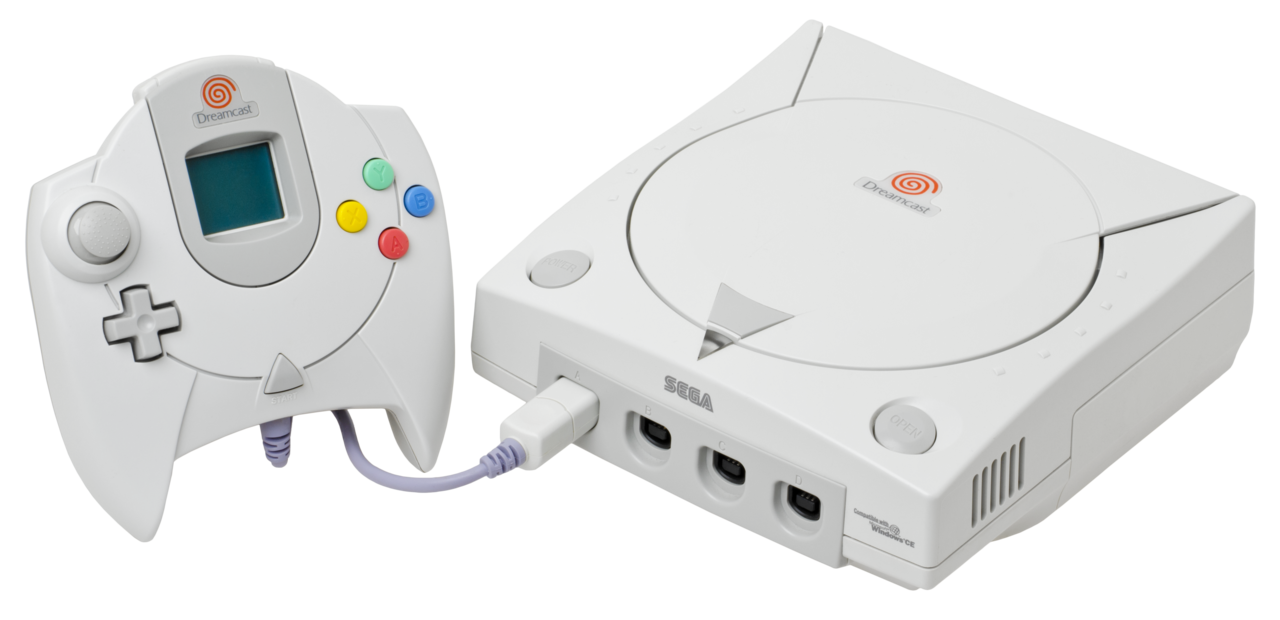
After years of daydreaming about SEGA, I heard the brand's last console was coming: the Sega Dreamcast. It launched in Japan in November 1998 and in the United States on the famous September 9, 1999, “9.9.99.”
One summer at the beach with some friends, one of them said:
“Hey, let's go to this place that rents consoles. Let's try the Dreamcast.”
We went. We asked for the console. They charged us something like 500 pesos. And we sat down to play Crazy Taxi.

Incredible. The image, the graphics, the smoothness, the music at full blast (the game had songs by The Offspring and Bad Religion). SEGA surprising me with its technology once again, just like Sonic years before.

That day has never faded. To this day I remember how impressive it was to see that console running that game, in a beach rental shop, for 500 pesos.
Is the Dreamcast coming back?
Recently, news started circulating that a new version of the Dreamcast was on its way. As a fan, I got excited. But I decided to do some research before writing this, and the truth is less thrilling (though not entirely sad).
The Dreamcast was discontinued in 2001, when SEGA decided to stop making consoles and focus only on games. Since then, fans have asked for its return again and again. Here is what we know as of September 2026:
- There is no official announcement from SEGA about a new Dreamcast.
- SEGA explicitly ruled out a Dreamcast Mini or Saturn Mini like the Mega Drive Mini. Shuji Utsumi, one of its executives, explained that they value their legacy but are not a retro company and want to create new things.
- The posts about a “Dreamcast 2” with out-of-this-world specs or a 4K “Dreamcast Station” going around social media have no official source. And the AI-powered “Dreamgen” was an April Fools' joke from April 1, 2026.
- What does exist is a rumor, from June 2026, about a low-cost handheld for 2D games with a 5-inch OLED screen and physical cartridges, which some link to a new Game Gear. It is unconfirmed and might come from a licensee rather than SEGA itself.
- There is also SuperSega, an independent FPGA console project that promises to run games from every SEGA console, Dreamcast included. It is not from SEGA, and it remains to be seen whether it reaches stores.
So no, a new Dreamcast is not coming for now. But I find it telling that, 25 years after its last console, the mere idea of SEGA coming back still sparks so many rumors. Few brands manage that.
For me, SEGA was always that: the console I watched from afar. The blue hedgehog on TV, the Game Gear that lasted ten minutes, the Dreamcast rented for 500 pesos at the beach. I never had one at home, and still it takes up a huge place in my memories.
Maybe because sometimes what marks us most is not what we had, but what we dreamed of having.
What about you?
What did SEGA mean to you? Did you have a Master System, a Mega Drive, a Saturn, or a Dreamcast, or did you also watch it from afar like me? Did you ever play Segacción or Hugo over the phone? Did you rent consoles at a local shop?
Tell us about your experience in the comments. I would love to read your memories.
Personal opinion. Written for Wisegrow Games, September 2026.
Comments
Be the first to comment.